

¿Los costos universitarios están superando el valor de la educación?
A medida que comienza un nuevo año escolar, los estudiantes enfrentan aumentos de matrícula que han superado con creces la inflación
Lectura de 5 minutos
PUNTOS CLAVE
- La matrícula universitaria y los costos relacionados han aumentado significativamente más rápido que la inflación general, lo que hace que la educación superior sea menos asequible para muchas familias.
- La deuda de préstamos estudiantiles ahora rivaliza con los saldos de préstamos para automóviles, destacando la creciente carga financiera que soportan los graduados.
- Los cambios demográficos y las presiones de inscripción pueden obligar a los colegios y universidades a repensar los modelos de precios y las estrategias de financiamiento.
Las escuelas están volviendo a sesionar. Esta semana tengo la oportunidad una vez más de viajar a mi alma mater, la Universidad Estatal de Oklahoma, para presentar a su clase de Fondos de Inversión Administrados por Estudiantes dirigida por el profesor Eric Sisneros. Valoro mucho las oportunidades que tengo de interactuar con estudiantes universitarios en varias universidades de nuestra huella. A pesar de toda la prensa negativa que uno puede encontrar sobre el estado de la educación y esta generación de jóvenes, entrar en un campus universitario y presentarse a clases avanzadas me recuerda por qué sigo siendo optimista sobre el futuro. Todavía hay muchos estudiantes ambiciosos, inteligentes y entusiastas que buscan dejar su huella.
Al mismo tiempo, sabemos que el costo de obtener una educación universitaria es muy diferente de lo que era cuando muchos de nosotros íbamos a la escuela. La idea de poder trabajar a tiempo parcial y pagar las facturas mientras asiste a la escuela a tiempo completo parece un concepto pintoresco y completamente anticuado ... Porque lo es. Nuestro gráfico de esta semana muestra un gráfico de la Reserva Federal que analiza el costo de la matrícula, las tarifas y el cuidado de los niños, en comparación con la inflación, medida por el Índice de Precios al Consumidor (IPC) general. (En plena divulgación, tratamos de separar el aspecto del cuidado infantil, pero esta es la forma en que la Fed presenta sus datos).
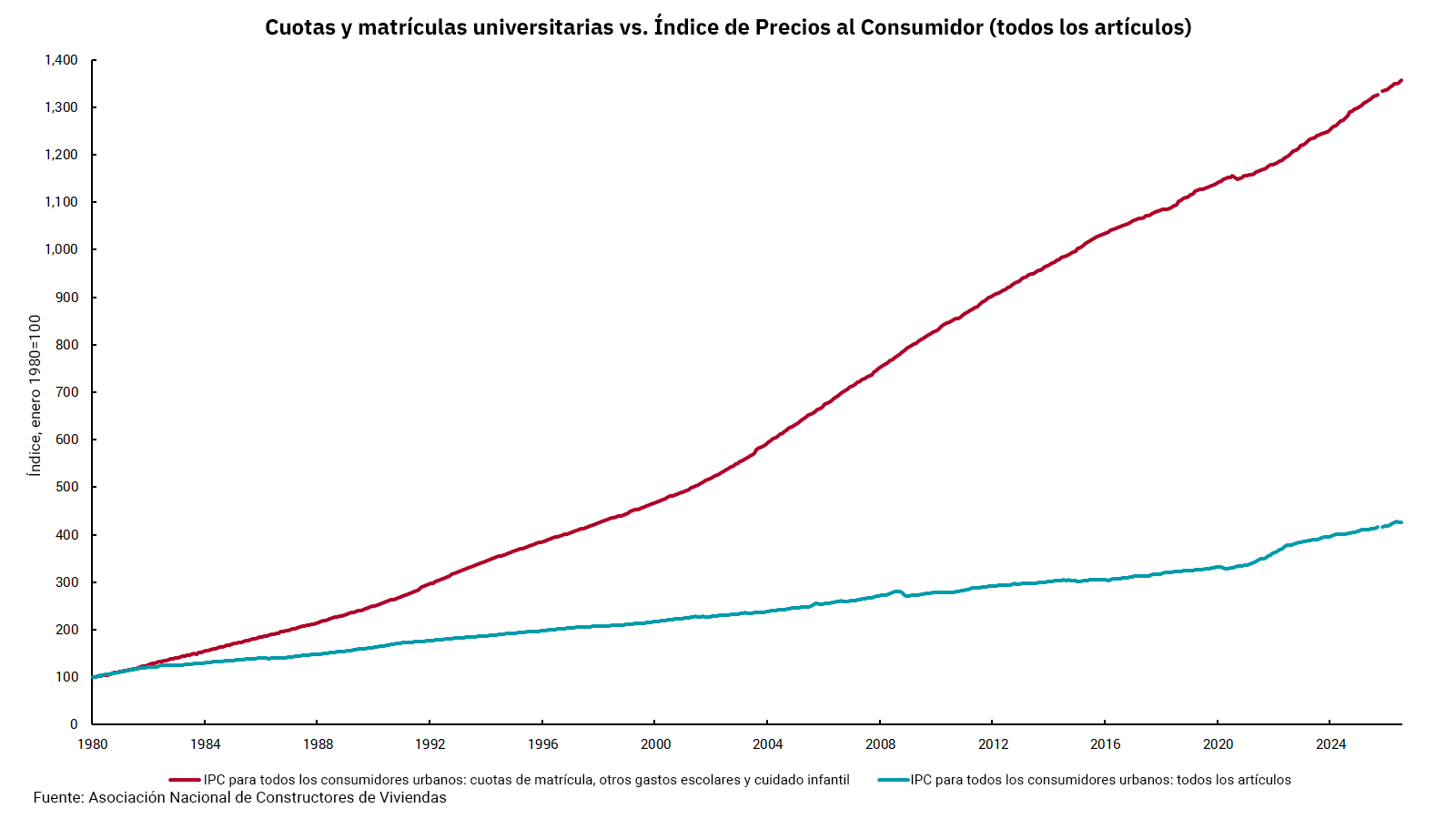
No es de extrañar que los estudiantes universitarios de hoy sientan que están detrás de la bola ocho cuando salen de la escuela. No solo no pueden trabajar para pagar las facturas mientras están en la escuela, sino que generalmente también se quedan con una importante deuda de préstamos estudiantiles que se contrajo para pagar el costo disparado de ir a la universidad. Para ser justos, muchas universidades ofrecen becas significativas y subvenciones de asistencia para aliviar parte del dolor, pero no hay duda de que muchos estudiantes se sienten obligados a endeudarse para terminar la escuela. Aquí es donde el objetivo de "ayudar" a los estudiantes proporcionando acceso a préstamos ha terminado, en muchos casos, perjudicando a los estudiantes. El acceso al dinero prestado permitió a las escuelas aumentar la matrícula, y algunos planes de incentivos mal construidos llevaron a los funcionarios financieros de la universidad a recomendar niveles excesivos de préstamos, en comparación con el potencial de ingresos para varios programas de grado. También sabemos que esto llevó a un mayor apoyo de "FNB mamá y papá". La deuda de préstamos estudiantiles, que es el 9% del total de la deuda pendiente del consumidor, ahora es aproximadamente igual a los niveles de deuda de préstamos para automóviles y más alta que los saldos generales de tarjetas de crédito, que representan el 7%.
Los niveles generales de inscripción pueden comenzar a caer en función de los cambios demográficos, que muestran que el número de niños de 17 años que ingresan a nuestra sociedad está disminuyendo. Como resultado, el panorama financiero de muchos colegios y universidades está disminuyendo. Algunos están respondiendo reduciendo los niveles de matrícula para estimular la inscripción adicional. Otros se apoyan en las distribuciones de fundaciones, la recaudación de nuevos fondos o la reducción de programas de grado para reducir costos. El hecho es que el costo de la universidad creció mucho más rápido que la inflación y los salarios. Al igual que muchos estudiantes en todo el país, estoy emocionado por el nuevo año escolar y el orgullo que todos sentimos en nuestra alma mater. Sin embargo, algún nivel de cambio debe ocurrir en el futuro.
Obtenga By the Numbers en su bandeja de entrada.
Suscríbase (Se abre en una pestaña nueva)